

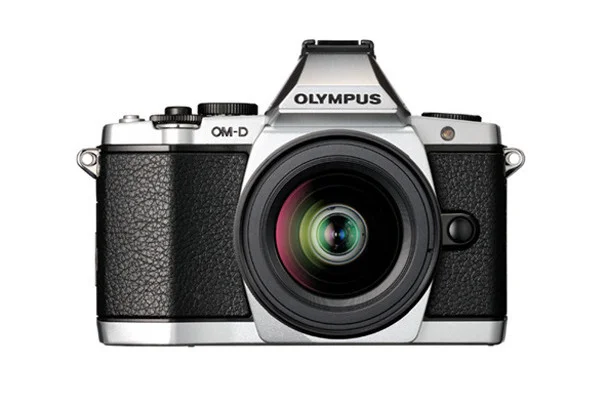
Mirrorless: Why I chose Olympus
...because I like it.
It's that simple. I'm not trying to be a smart ass or anything. I just really like it. It's my preference. That's reason enough.
I'd be more than happy to discuss it further with you. Why not get in touch, or come along to a Photo Walk and meet me.
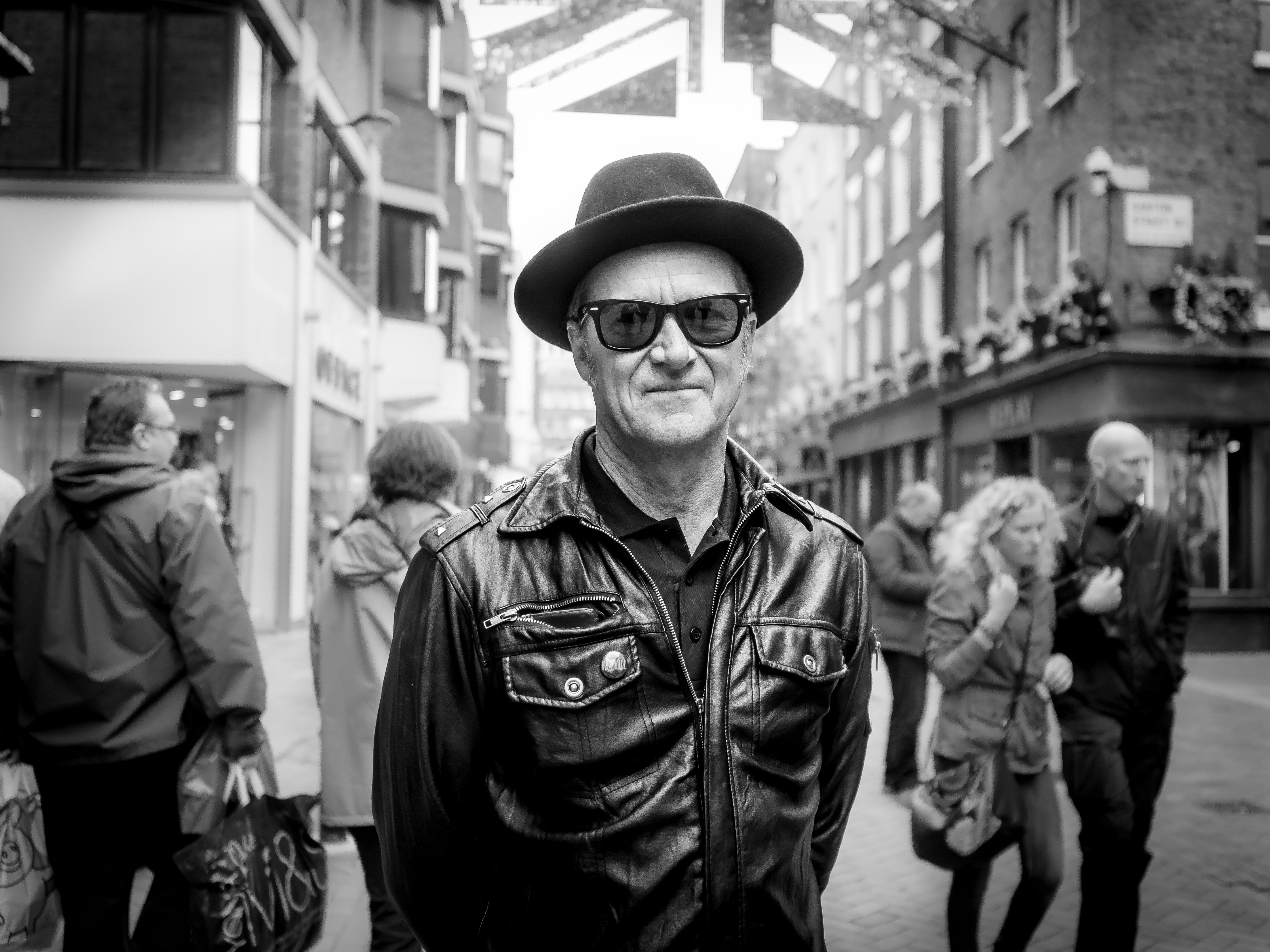
Portraits of London with the Olympus OM-D E-M5
Sometimes the world has a pretty dim view of London and prefers cities such as Paris and New York for photography. They're both grand cities; I know this first hand, but London is a wonderful place and more importantly it's full of some of the most colourful characters you're likely meet almost anywhere in the world!
In London over 300 languages are spoken (Not including the local dialect 'Cockney' :) ). Over 8 Million people call London home and it is the most visited city in the world.
So, when it comes to making portraits of strangers I'm very fortunate to have the City of London on my doorstep.
The Ready Steady Pro Street Photography Photo Walk
On Sunday 27th April I took over 20 photographers on a photo walk in London. The walk, organised as part of The Ready Steady Pro series of meetups, would take in a 4 mile route, passing through Covent Garden, Leicester Square, Carnaby Street, The Mall, Westminster and South Bank. It may not seem like very far, but with over 20 photographers and countless coffee stops (mostly my fault) it took the best part of 6 hours!
Outside Your Comfort Zone
As the organiser and an experienced street photographer It was my aim to get the group out of their comfort zone by making street portraits. This involves approaching complete strangers on the street and making their photograph with their permission. It was something that many of the group were very uncomfortable doing at first, but by the end of the day, after plenty of encouragement and advice (which I'll write about in my next post - Subscribe to receive updates via email) it seems almost everyone had made a few portraits of their own.
I was really pleased to see people getting outside of their comfort zone and talking to locals and tourists.
Gear & Equipment
There were all sorts of cameras to be seen on the day: Sony, Nikon, Canon, Fuji and Olympus (xx was even using an Olympus OM Film Camera!) I personally had my favourite camera to hand: my Olympus OM-D E-M5. Seeing as the walk was hosted in conjunction with Paul Griffith's One Camera One Lens community I made the decision to try and not change lenses all day, so bar a couple of photographs, these portraits were made with the Olympus M.Zuiko 17mm f/1.8mm prime lens (effectively 34mm owing to the x2 crop factor of Micro Four Thirds). It wasn't later on in the day until Linda Johnston and I had a chance to catch up that I had a play with the M.Zuiko Pro 12-40mm f/2.8 (giving an equivalent focal range of 24-80mm). I almost didn't give this lens back to Linda!
I've included all of the EXIF data: just hover above the photographs to see the details.
Enjoy the portraits! You can also click them to enjoy them full screen
The Portraits
We were casually walking through South Bank having a conversation about photography when I noticed this chap briskly walking towards us. I promptly stopped whatever it was that I was saying in the conversation and stepped into this young chaps' path "Wow! Can I please, please make your photograph?" I asked. It wasn't my usual method of convincing people I'm a trustworthy person and that they should let me photograph them, but this guy was in such a rush that I couldn't afford to miss the opportunity.
He kindly obliged and I had him step to one side so I could put the river and some sort of skyline behind him. With the sky now being behind I made a quick adjustment to the aperture and shutter speed to expose correctly and made 3 frames.
As always I took his email address and I'll send him this photograph shortly.
On our way to Leicester Square we walked through The Burlington Arcade in Mayfair. The Arcade is home to many fine shops selling what can only be described as 'Premium' goods; luxury cashmere sweaters, antique fountain pens and of course - a Leica Camera store! We couldn't resist so a few of us went in for a look around. The store is barely 10 feet by 8 feet but it had enough Leica's on display that when sold would amount to more than I'm likely to spend on camera gear in an entire lifetime! Put it this way - the prices weren't on display. And when the prices aren't shown, you know you can't afford something, right?
This man greeted us as we entered, with our cameras in our hands and around our necks a few of us piled into this tiny, minimalist store to adore the Leica cameras which were stored behind glass to protect them from drooling enthusiasts who go there to dream. They weren't prepared to just let us play with the cameras unfortunately, but after some casual conversation, some quizzing about how much of a staff discount he got (which he wasn't prepared to share with me) and after he'd had a good look at my E-M5 I asked to make his photograph - which he was more than happy to allow me to do. For good measure I was sure to include the Leica's in the background here.
I'm not really into my gear too much, but they had a particularly impressive display behind glass in the middle of the store, where they showed the stages of the making of the T-System from one block of aluminium, to the finished camera. This video explains the process.
Perhaps my personal favourite from the day. This is Keith. I was encouraging a participant of the walk to approach strangers and ask to make their portrait. As I said earlier It's easier for some people than it is for others so on this occasion to demonstrate I said "Look, just watch me". I spotted this guy waiting in the middle of the street. He was easy to spot: other people seemed comparatively plain looking, but this guy had his cool hat and dark shades - He was my next portrait!
"Hey there, I love the hat! I look like such a dork in hats! Where did you get it from?" I asked
"I got this back home in The States" He said in an American accent. "Hats don't really suit me either but I don't care" he continued
"No! It looks cool on you, it really does. Do you mind if I make your picture?"
"Yeah sure, go ahead"
As I got into position he started telling me that he was from Seattle and that he was here doing the tourist thing at the moment. We continued our conversation, I explained that we were there in London doing Street Photography. I handed him a business card, thanked him for his time and we continued on down Carnaby Street.
As we got past Leicester Square we stopped for a coffee for a short while. Many people were a little achy by this point. Just next door the Costa where we stopped were these guys (above and below) standing outside a shop providing people with samples. Of course, being the sort of people to get attention and provide samples meant that they were happy go lucky and confident. After trying the Tea and the Cold Hot Chocolate I asked this guy for his portrait. At first he was little unsure, but it just a took a "Oh come on!" to convince him: "Go on then!" he said.
I included the tray of sample drinks in the frame to show what he was doing on the street.
Next up for a portrait was this guy. When I first approached him and his colleague they were both a little unsure, as many potential subjects can be: it's not every day someone stops to chat to you and then asks to make your photograph!
After making the photograph of the gentleman in the previous picture we all had a little laugh and then it became a little competetive. This guy here agreed to have his picture taken because the other guy had just has his done too. So rather than standing there a little nervously this chap put on a smile, gave his head an interesting tilt and effectively gave me a pose for the camera. Good on him!
An area of London I've always had success with street portraits is over at South Bank. It seems to be an area that a real odd mix of people walk through. It's south of the river between Westminster Bridge and Waterloo Bridge right next to the London Eye. For this reason you get plenty of tourists, plenty of people who work in London but also a collection of people who seem to be drawn to the area by the Undercroft - a very popular and globally recognised skate park. It's currently under threat as money men want to demolish it and build retail units in it's place. Owing to it's location as I mentioned above it's in a prime position to make any businesses that would potentially occupy the space a good amount of money. However, as the sign in this chaps mouth suggests - "You can't move history"!
I approached this man who was manning a table outside the Skatepark collecting signatures for the 'Save South Bank' petition. I offered a signature in exchange for a portrait, which he happily agreed to. As I wrote my details down on the clipboard he grabbed his hat, shades and the flier and did this!
Next up was a young chap also collecting signatures for the petition. Having seen his friend have his photograph made I think he too warmed to the idea. I didn't have to ask much this time round other than to look at him, gesture by raising the camera and asking "Can I make your picture too?" He nervously nodded and agreed and then seemingly tried to out do his friend and stuck this over his eyes.
I was about to ask him to take it off, but I actually quite like how it turned out. I made a few frames and thanked him. What a cool guy!
By this point in the day we're still at South Bank. As it's close to Waterloo Station, which is linked very well to all areas of London via the Underground, this was an ideal for many people who joined us on the walk to make their way home if they weren't staying later with those of us that were going to have something to eat.
I was saying a few goodbyes and thanking people for coming when I saw this guy walking in our direction. There was no way I couldn't photograph a Jedi in London! Typically, people dressed up like this don't mind having a laugh and clearly don't care so they can be great street portrait subjects. I stopped him and said: "Wow! Great look you've got going on there! Where have you come from, how come's you're dressed as a Jedi?"
"It's the 2014 Sci-fi-London Event. It's closed now you've missed it!"
I asked for his photograph. He pulled out his lightsaber, pressed the button and it made that notorious Lightsaber noise! I made this frame, shook his hand and thanked him. Off he went!
So, that's it for this post. I hope you've enjoyed the photographs and the stories behind them?
Future Events
Come and join me on a UK Photo walk. Upcoming events include London (29th May) and Brighton (August 17th). We are also making plans for a walk somewhere in the Midlands and perhaps Manchester too. Just subscribe to keep up to date, or head on over and Join the Ready Steady Pro community
Street Portrait Tips
Making Street Portraits can be a challenge for some - You need to bring your confidence and ask the right questions. Next week here on the Blog I'll be sharing my top tips for getting a 'Yes' when asking people if you can make their photograph. Subscribe to receive updates via email
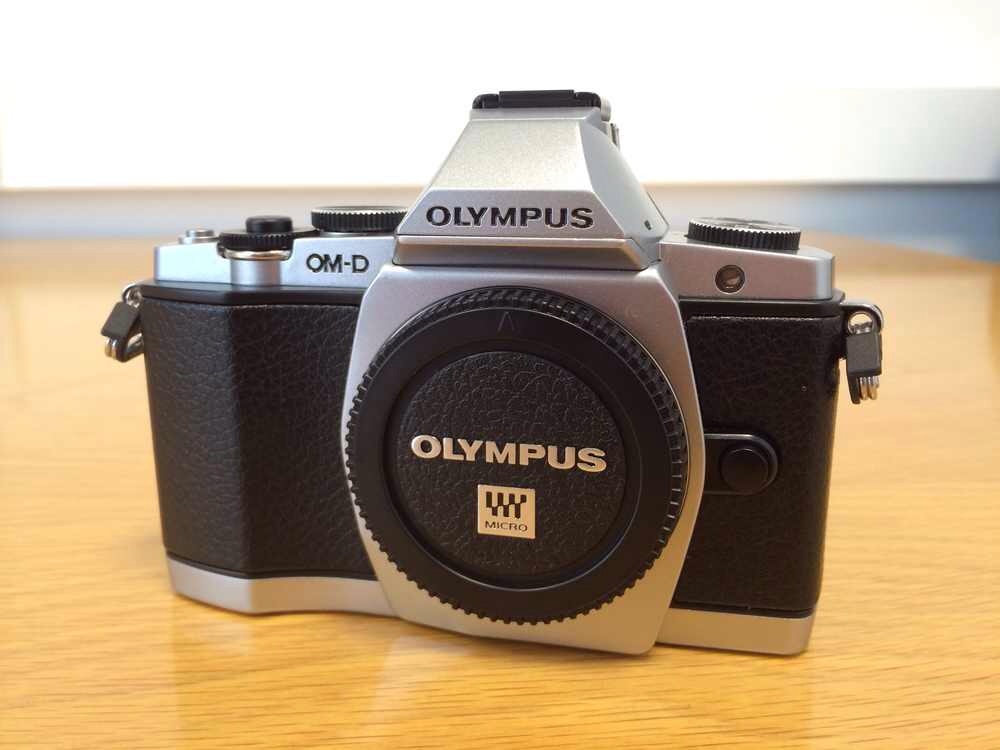
Can we get on with making photographs now?
There has been so much debate lately surrounding DSLR vs Mirrorless.
DSLR's are too big. Mirrorless are too small. DSLR's are too heavy. Mirrorless have small sensors.
Enough already!
The fact is they're all cameras, whether you're shooting Medium Format, DSLR, Mirrorless or even iPhone they all take photographs. Sure, each camera approaches the task in a slightly different way and as such they're all suited to different things. But people ask different things of their cameras, therefore we don't all need the same camera or put the same priority on the same elements of a camera.
On different pages
I've seen debates between sports photographers and portrait photographers: one claiming that anything less than a Canon 1Dx or a D4s isn't worth the money and the other saying that those high end DSLR's aren't worth what they cost. The thing is with those photographers both requiring very different things of their cameras it really wasn't a debate that was being had on the same page so to speak.
Its like saying my apple is better than your banana. Sure they're both fruits but they're incredibley different!
The proof of this is portrait and architectural photographers may need megapixels so could be using a medium format (not known for it's low-light performance). They're likely to be indoors using controlled studio light. I'd argue that frame rate and weather sealing perhaps aren't at the top of these photographers' list of requirements when choosing their camera.
A sports shooter needs fast and accurate tracking. Therefore a Canon 1Dx would be a suitable camera. It's weather sealed and built like a brick. Although it's perhaps not ideal for street photography. It's maybe overkill for a portrait photographer.
A street photographer will be out all day on their feet walking the streets trying their best to blend in and be incognito. A Mirrorless camera, being light and small and not fitting the description of the typical DSLR is a great ally allowing them to photograph daily life without arousing suspicion. It is less intimidating.
So, my point here is NOT that a DSLR is only good for sports, or that a Mirroless is only good for street, because I've seen people use DSLR's for street, I've seen people shoot weddings with Mirrorless and I've seen people shoot a great many other things with a series of different cameras, my point is that we really need to stop debating it and accept the fact that people have choice now. That new cameras that are different from DSLR's are available and that people like them. Choice is good. Choice forces innovation in an industry. Even if you don't use or like Mirrorless cameras you should be pleased that they are here so that we can see new things from the old guard camera manufacturers.
Does it have to be 'or', or can it be 'and'?
One thing people often forget is that it doesn't always have to be an 'or' situation. Canon or Nikon. JPEG or RAW, DSLR or Mirroless. Apples or Bananas. I'll be out today in Central London with over 20 photographers shooting street. I have 2 Mirrorless cameras with me. In a couple of weeks I'll be back shooting weddings again. I'll be using my DSLR for that.
The Future
With regards to the future of the form factor of cameras? That will all depend on the consumer and the manufacturers of course. If these camera makers keep producing DSLR's and people keep buying them; they're not about to all of a sudden stop and change they're strategy. They'll make what they can sell.
As for the consumers: us photographers - we'll keep buying what we like and what we need for the job, whatever camera that may be and whatever camera suits them most. It's all about preference.
That said, can we please get on with making photographs now and get back to being creative's?
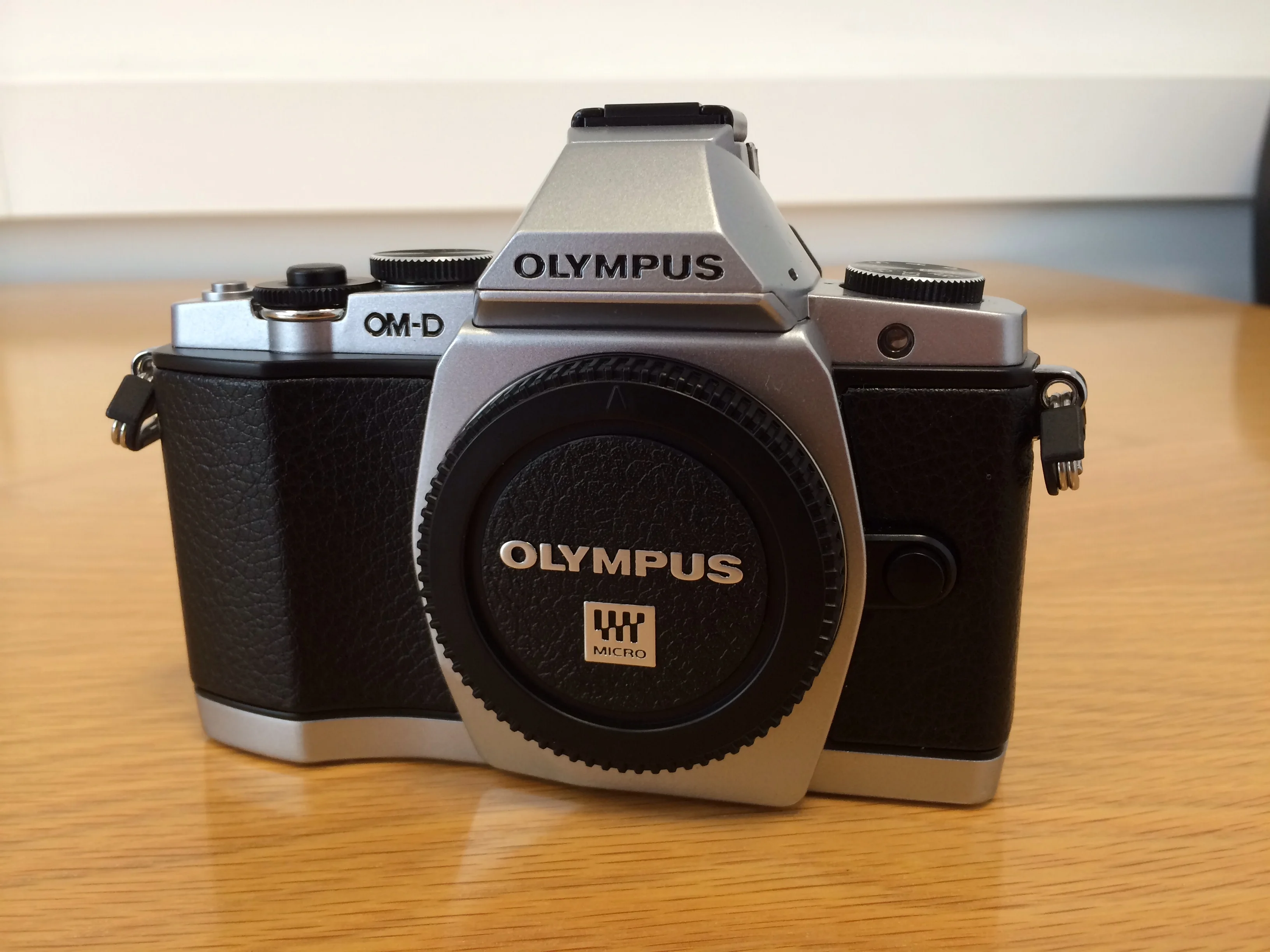
First Impressions: Olympus OM-D EM-5
It's been two weeks now since I took receipt of the OM-D E-M5 from Olympus. Initially, the E-M5 I had was on loan from Olympus UK who were kind enough to send me a camera so that I could review it for the Ready Steady Pro Photography Podcast and Blog, which I will be doing in due course. But I'm not going to write a full review and release my video review until late March. At that point I'll have had the camera for 5 or 6 weeks and I'll have had ample opportunity to to put it through it's paces fully: I'll be playing with it at the Photography Show in early March, I'll be out in Boston in the US in mid-March and I've got a day of Street Photography In London too between all that, so plenty of opportunity to really see what it can do.
Now, before I go any further and tell you about the camera itself I just want to let you know that I was personally quite skeptical about the mirrorless movement in general. Sure, the lightness and size of these cameras appealed to me, but I had serious doubts about their performance and ability and credentials before I decided whether or not I should jump on the bandwagon. My view was that they were an expensive fad almost, appealing to those people who shot film and were lured by the retro styling of cameras such as the OMD range from Olympus as the Fuji's.
However, I'll be clear and tell you now that I have fallen in love with the OMD in particular. At the time of writing I do still have the E-M5 on loan from Olympus UK, but it only took a week of using the loan camera before I put down the cash and bought my own, along with the Olympus M.Zuiko 17mm f/1.8. The pull for me, as well as the performance, as I talk about below, was also a great deal that Olympus are currently running whereby if you buy the kit E-M5 (Body + 12-50mm lens) you get a free 45mm f/1.8 and 2-stage HLD-6 Battery Grip. Those retail at a combined price of over £430 and Olympus were offering them for free. So, I jumped at the chance. (check out the deal and all the details on the Ready Steady Pro Blog)
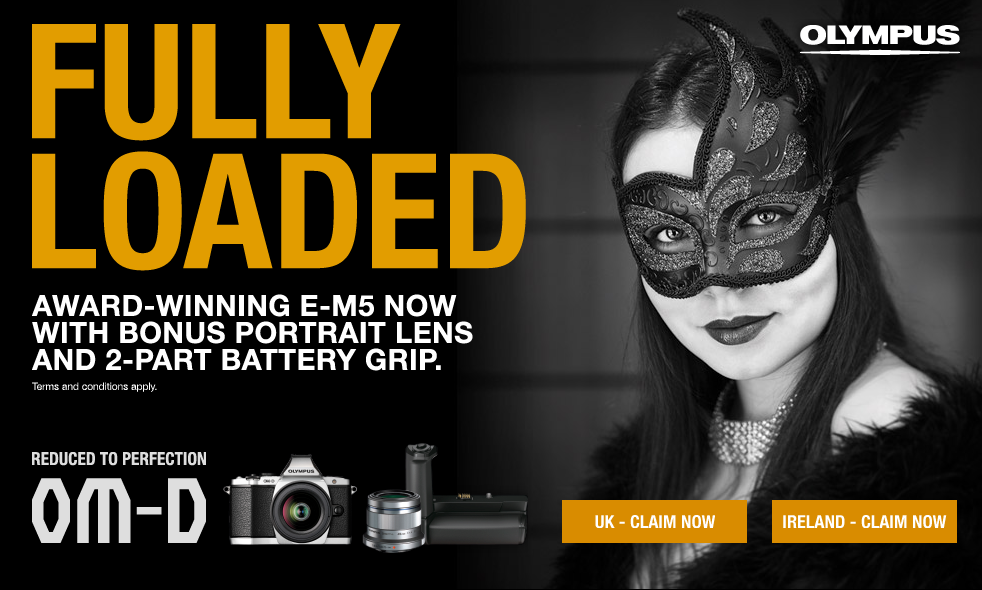
So, today I want to give a first impressions style review. My thoughts so far on this extremely tidy package and to give you a real honest opinion of what the camera can do, what it can't do and ultimately a conclusion.
The Build Quality
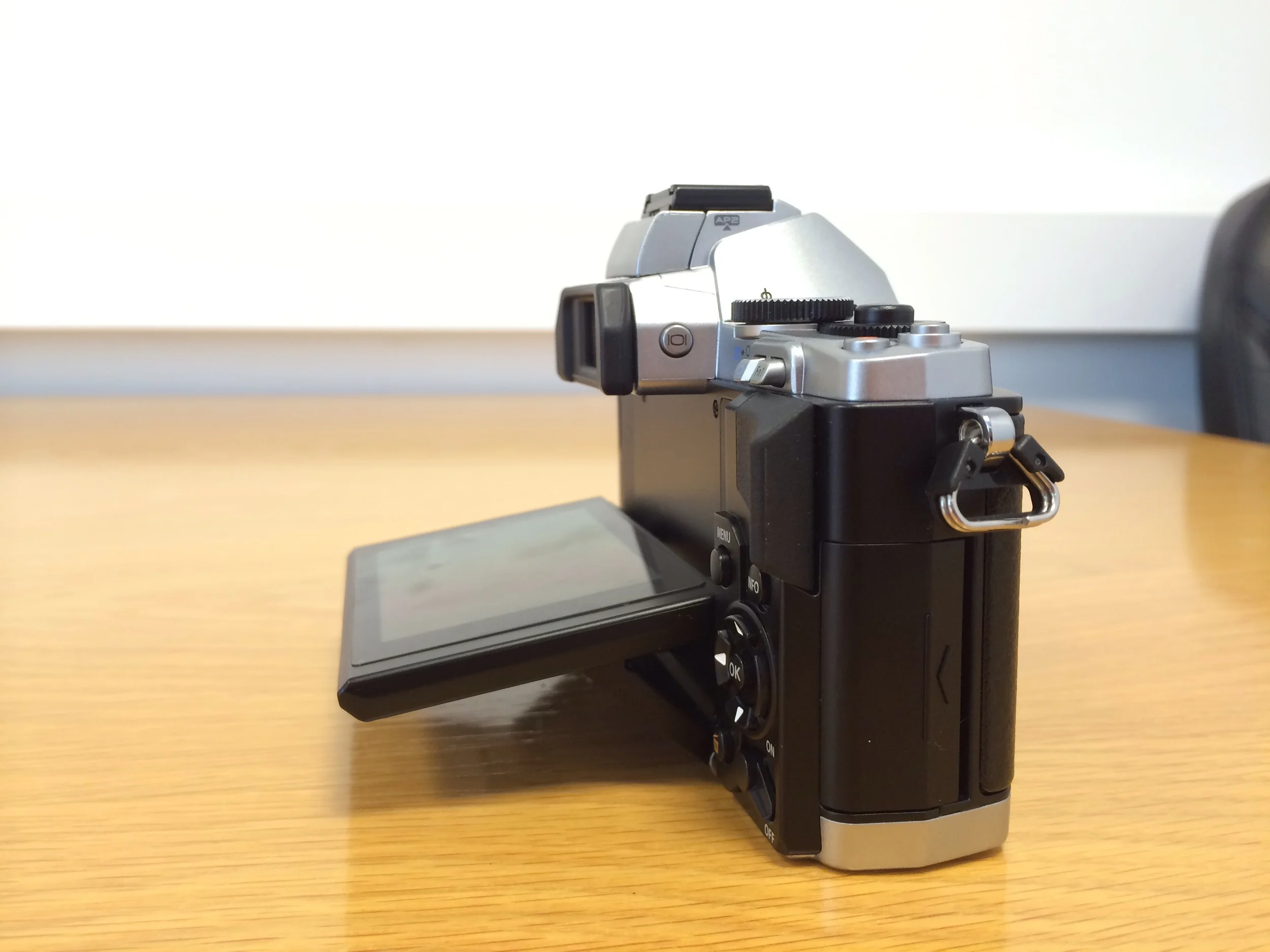
The reason I want to start by talking about the build quality is because it truly was the first thing that blew me away when I took the lease camera out of the box: It's weighty, it's very sturdy and it's all-metal body gives for an amazingly solid build. It is nothing short of impressive and that goes a long way to making this feel like a very serious camera, rather than just a little compact point and shoot with an EVF, which some people have often mistaken it for.
As someone who is used to shooting with a Canon 7d, which you may know also has an all-metal weather-sealed body and is built incredibly well by Canon, I was pretty much expecting something mostly plastic when I got the E-M5 out of the box. I was however pleasantly surprised to find that it feels as solid as any high-end DSLR when it's in your hands. The only thing I can add to this - and this sounds odd, I know - is that the E-M5 doesn't feel hollow. It feels very much like every millimeter of space inside the camera is packed with technology and that it all holds together very well.
Being a weather-resistant body though, I should have guessed that it would be well built. I guess I just didn't know what to expect seeing as it was the first time I'd held an Olympus camera.
To be honest it's not worth me saying too much more about the build quality because you genuinely do have to feel it to believe it, so to speak. If you're at your local camera store or a trade show be sure to pick one of these things up. I'm sure you'll be as impressed as I am.
Ergonomics - How does the E-M5 feel in your hands?
Now, this will be subjective depending on who is holding the camera. I know that for sure. Personally for me though, it feels superb. That solid mass in your gripped hand feels great. It's heavy enough that you feel the quality and that weight gives it a sense of balance. So far I've only tried the kit 12-50mm and the ultra-lightweight (yet, all metal) 17mm f/1.8 M.Zuiko lens. This prime has hardly come off the E-M5 since I got it. When I talk about balance though I'm referring to the way the camera feels when you're walking around with it, when you're holding up to your face to shoot with it. For example when I'm out and about with the Canon 7d and the Canon 70-200 f/2.8 L IS USM II the camera feels extremely front heavy for obvious reasons. Add an extender to that and the feeling is amplified. Now, I know that's not comparing apples for apples: One is a micro-four-thirds system with a compact prime and the other other is a Large DSLR with an L Class telefocal lens mounted to it, but it illustrates the point I'm trying to make. Albeit in an exaggerated manner. At the end of the day what I am saying is that it feels great.
Some may say that it's too small and that you don't have enough grip or body to get a decent and comfortable purchase on the camera when it's in your hands, however you do have the optional 2-stage battery grip for the E-M5, the HLD-6. The beauty of this grip is that the 2-stage setup means if you can screw in the first part of the grip to add the desired 'bulk' to the front of the camera so that you have something more substantial under your finger tips. The bonus however, and I'll admit I'm yet to experience this first hand as my grip is still in the post from Olympus, is that the second part of the grip is the dual-battery part with portrait-oriented controls. Effectively, this makes the E-M5 much closer to the feel of a DSLR. I think I may be right in saying that no other compact system has this (Fuji, Panasonic, Sony etc?)
I'm used to using my 7d with a grip because I honestly believe that it doesn't feel quite right without it, so for me this option ticked a huge box. Although, I will probably only use the first stage of the grip for street photography. I'm going for incognito. Not obvious. I certainly will have te battery/portrait grip on it at all other times.
This is another part of the reason I'll be doing a more full, in-depth review in the middle of March; by that time I'll also have my 45mm f/1.8 M.Zuiko and Battery Grip to talk about.
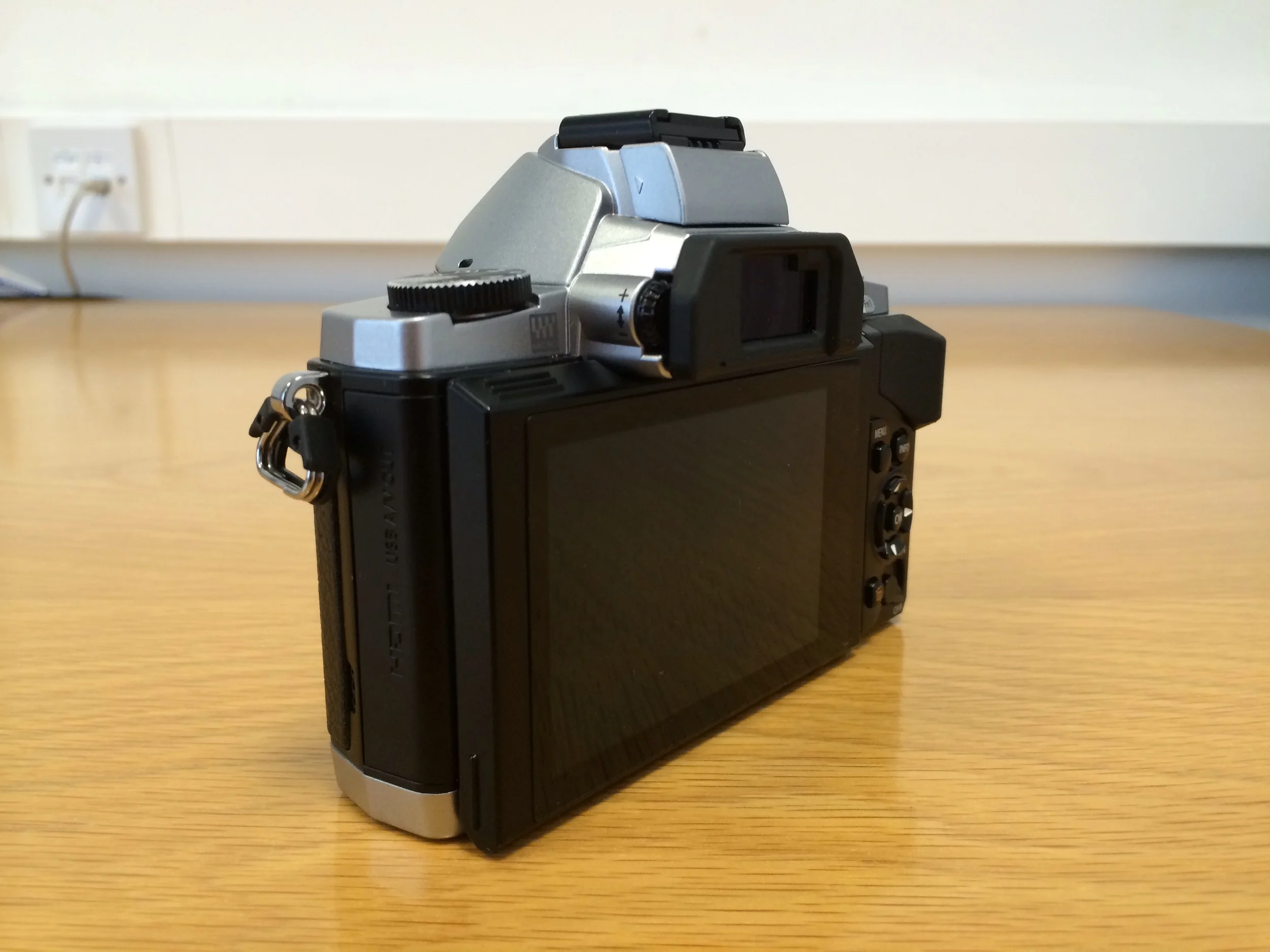
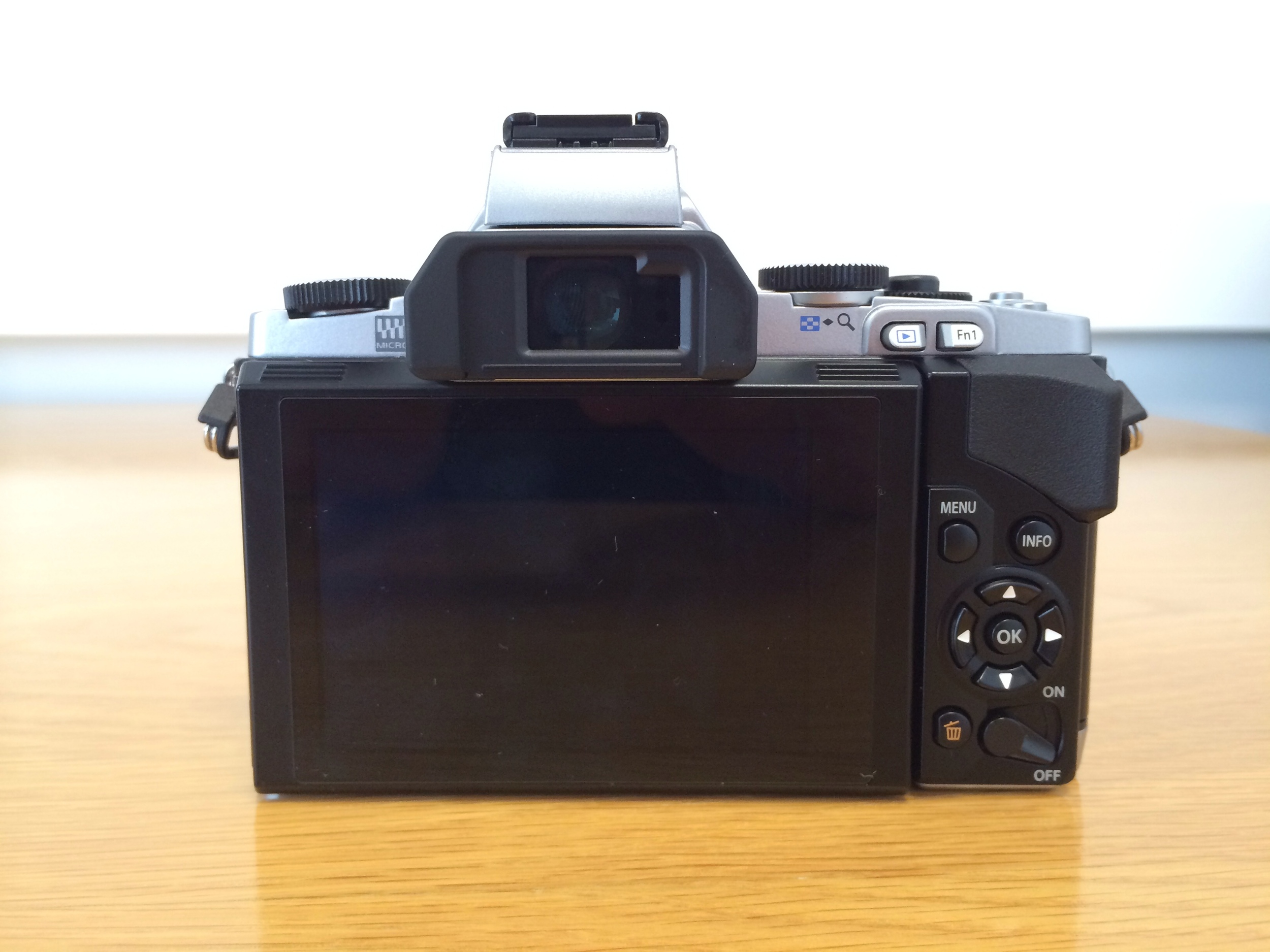
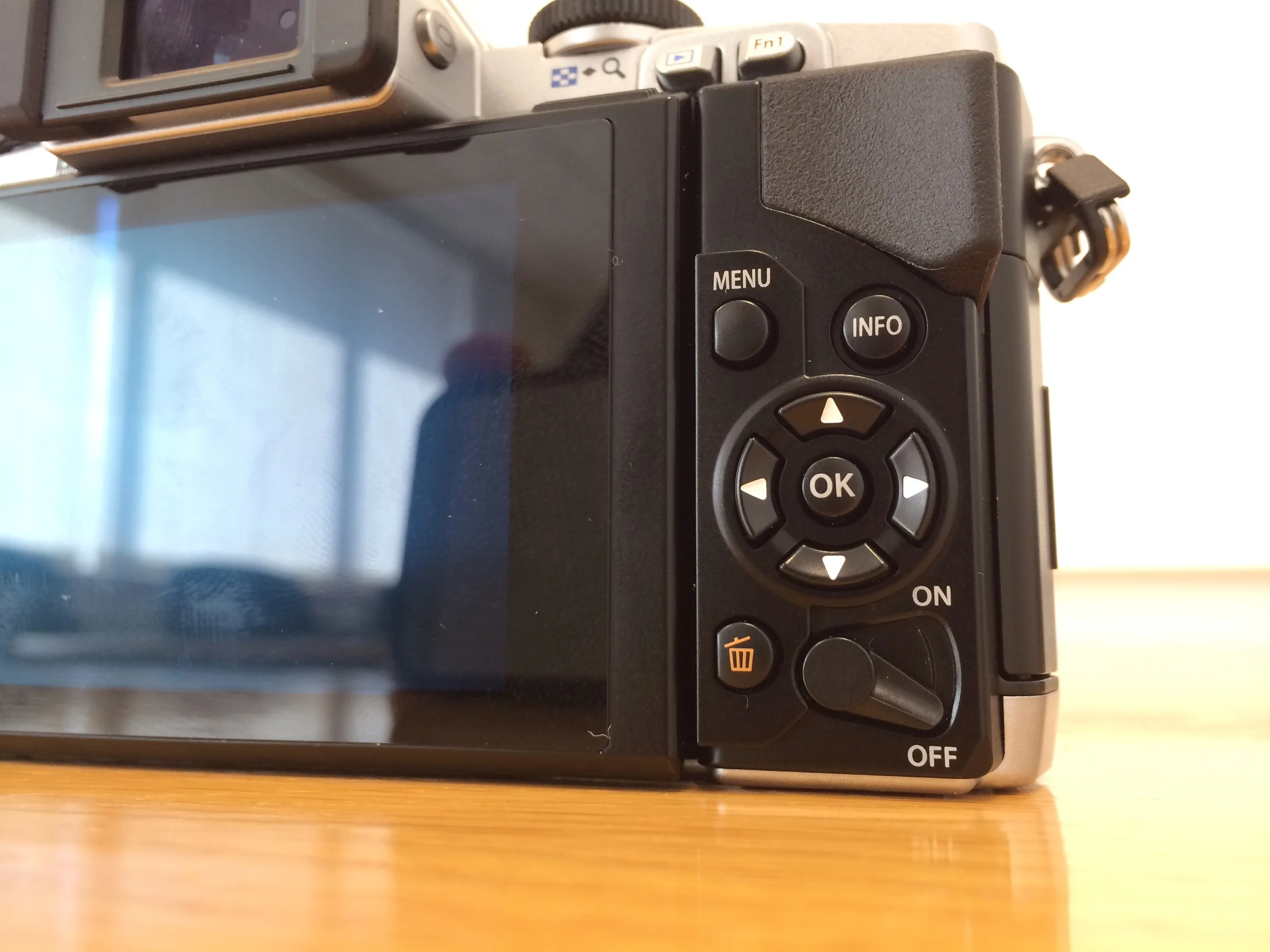
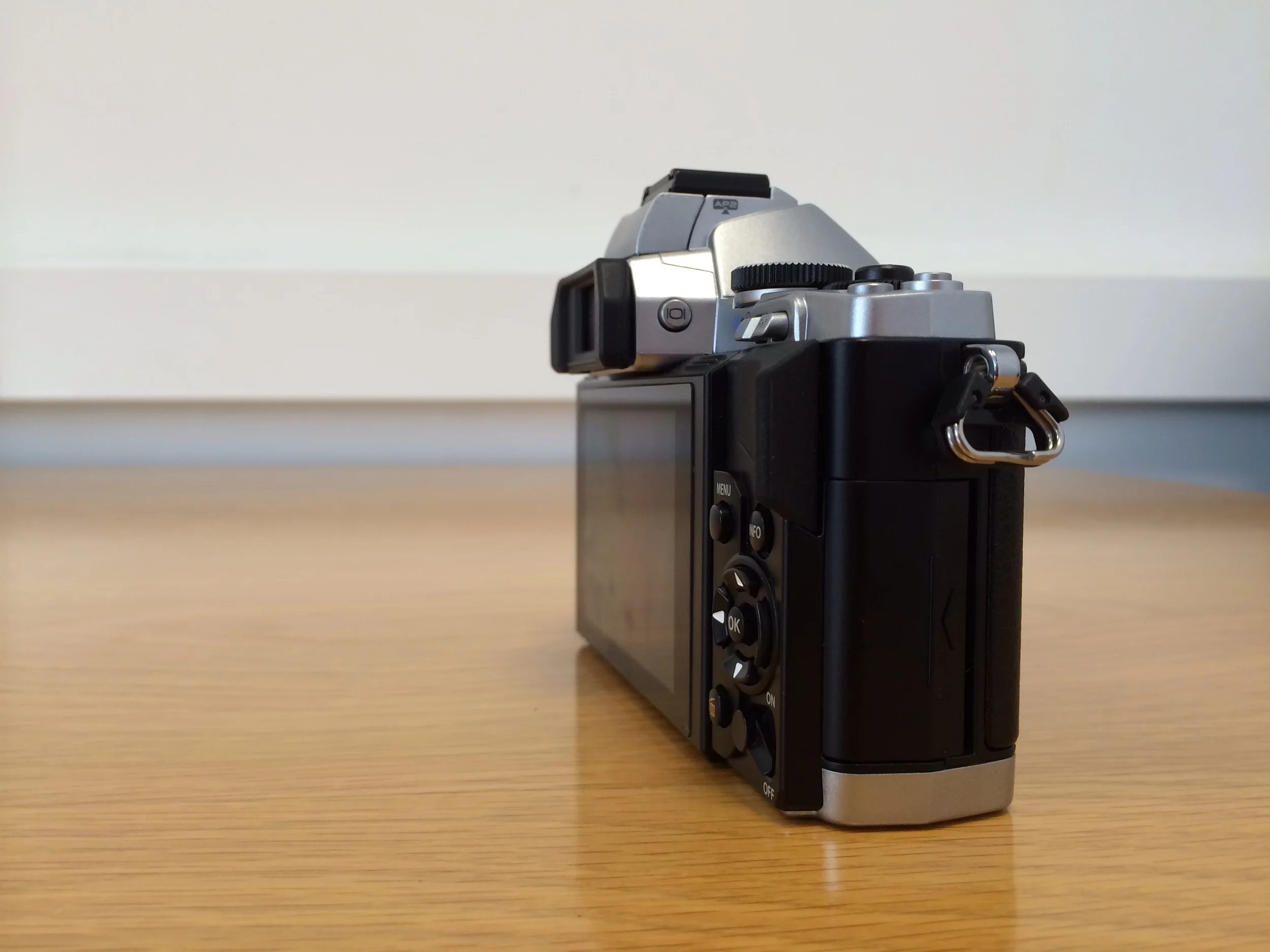
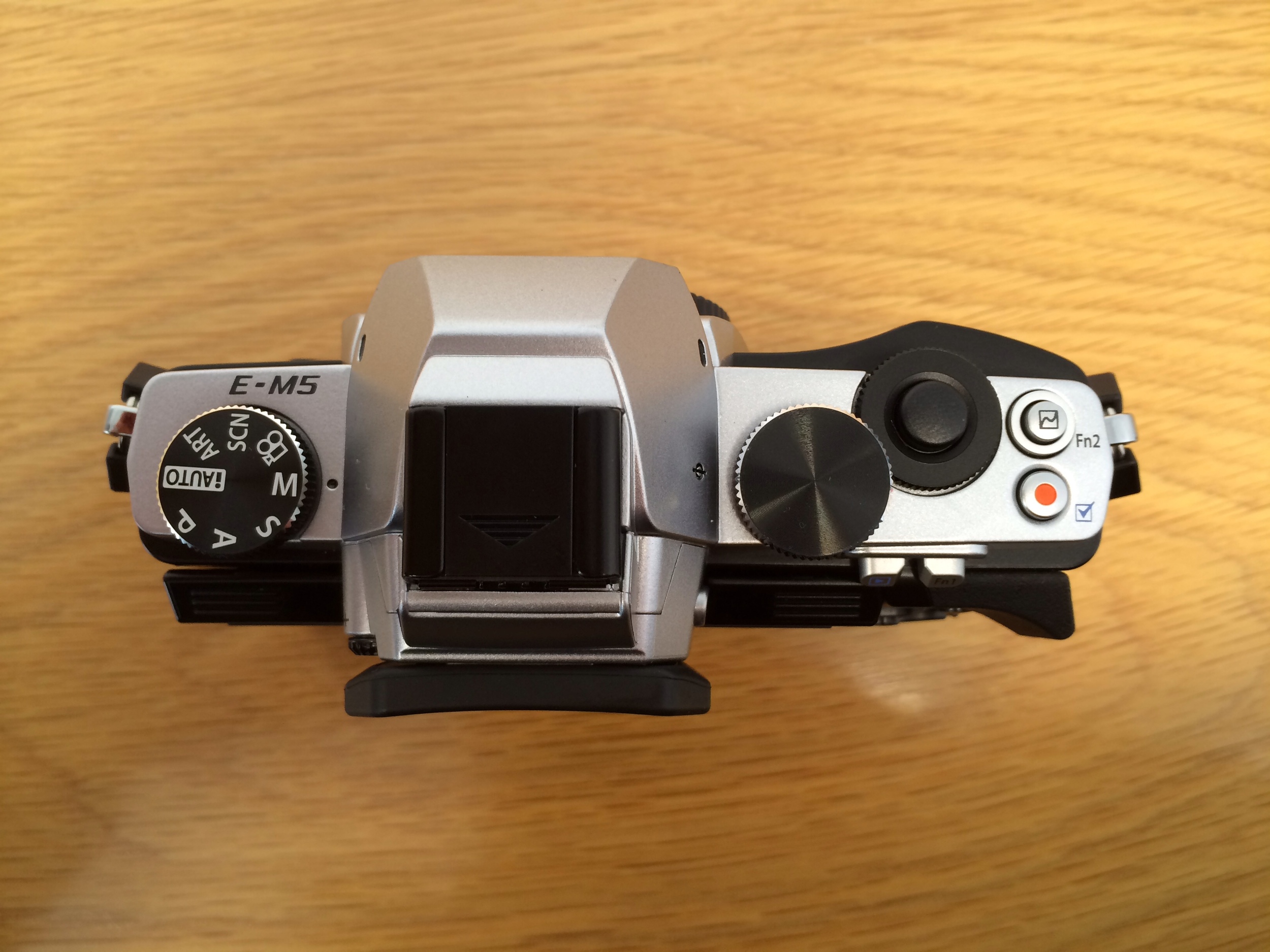
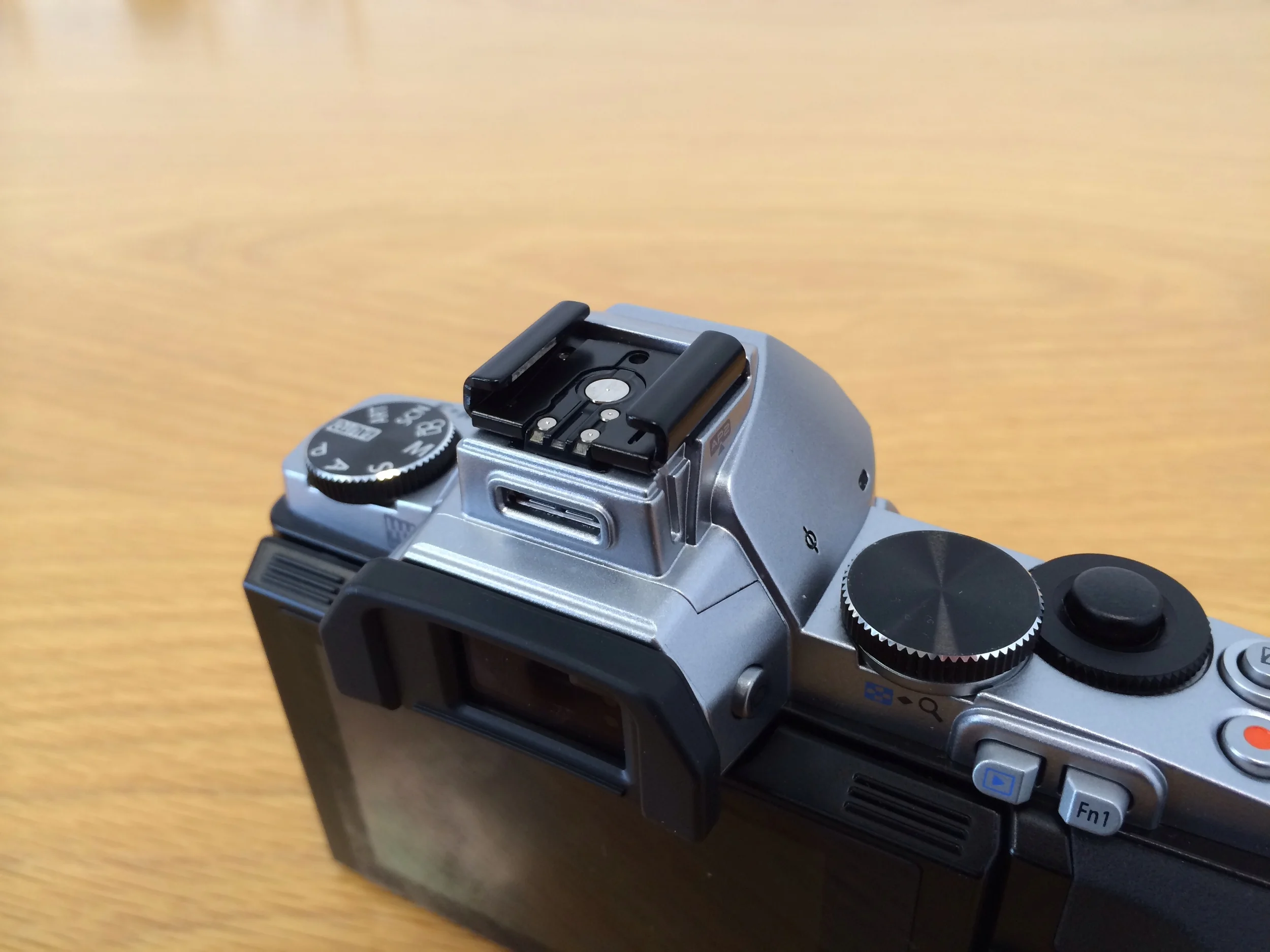
In summary though - for me the E-M5 is a masterpiece of manufacturing from Olympus and it feels great in your hands, grip or no grip. It doesn't bother me either way. A one word summary would be "Quality.
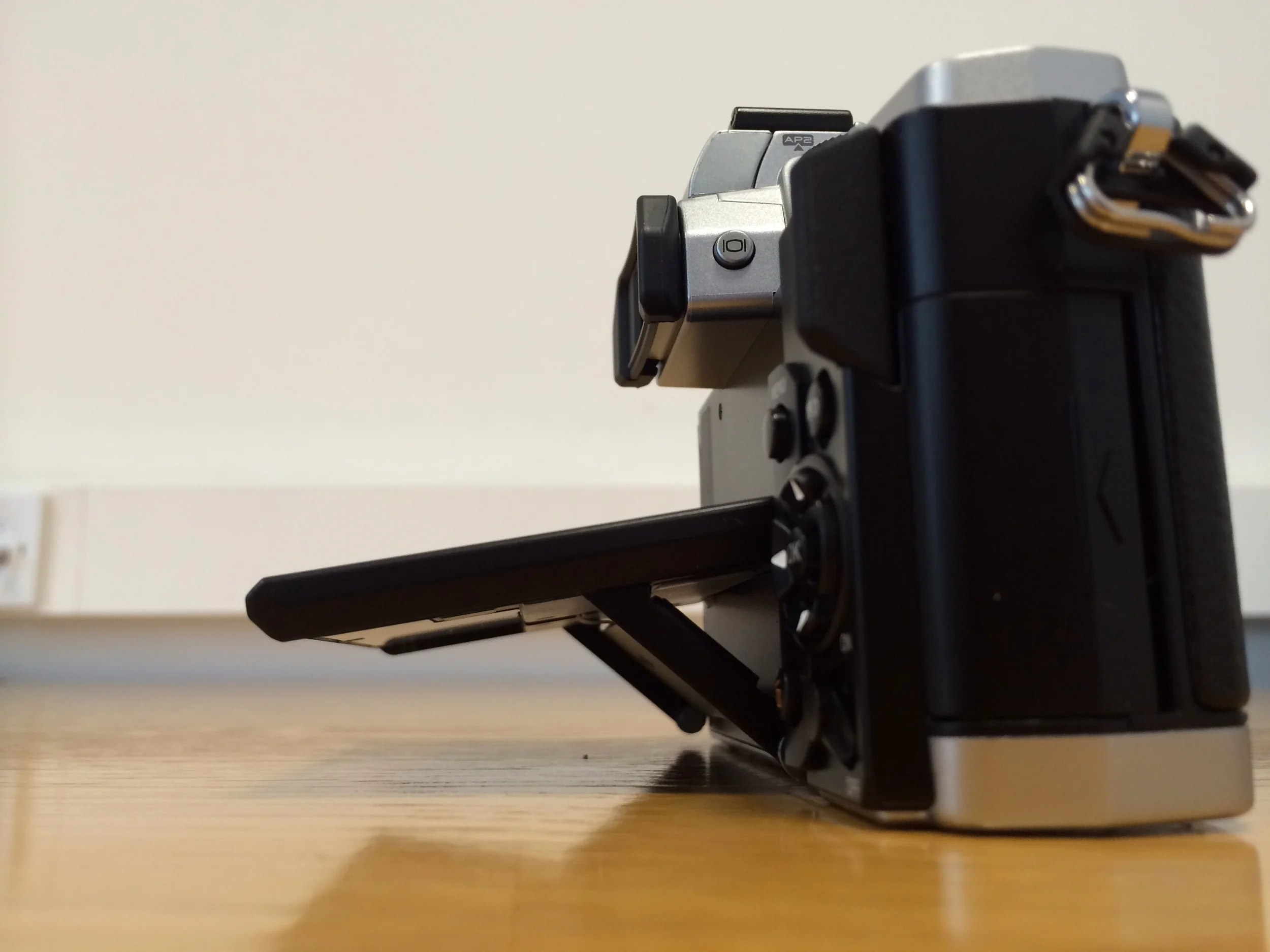
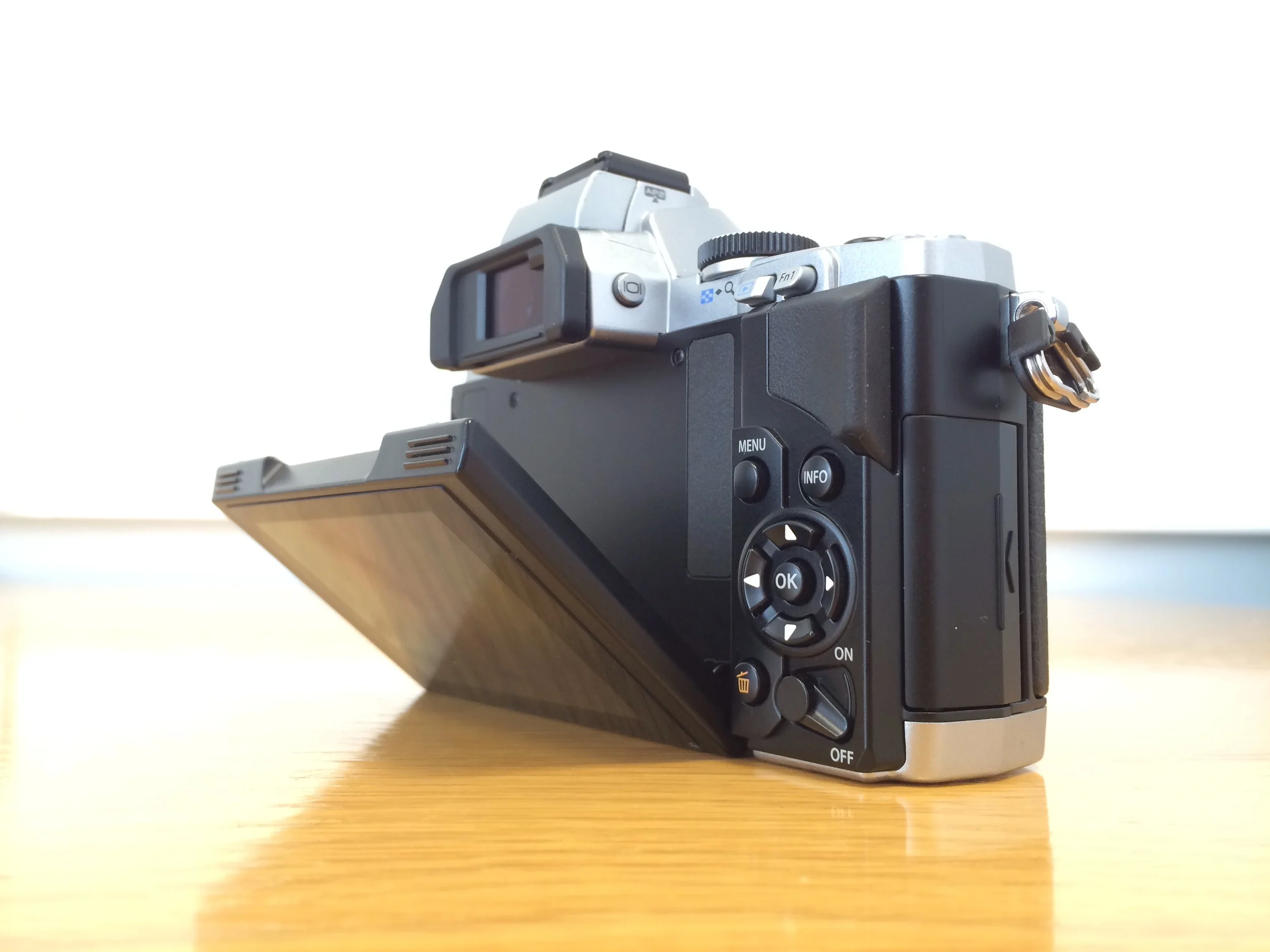
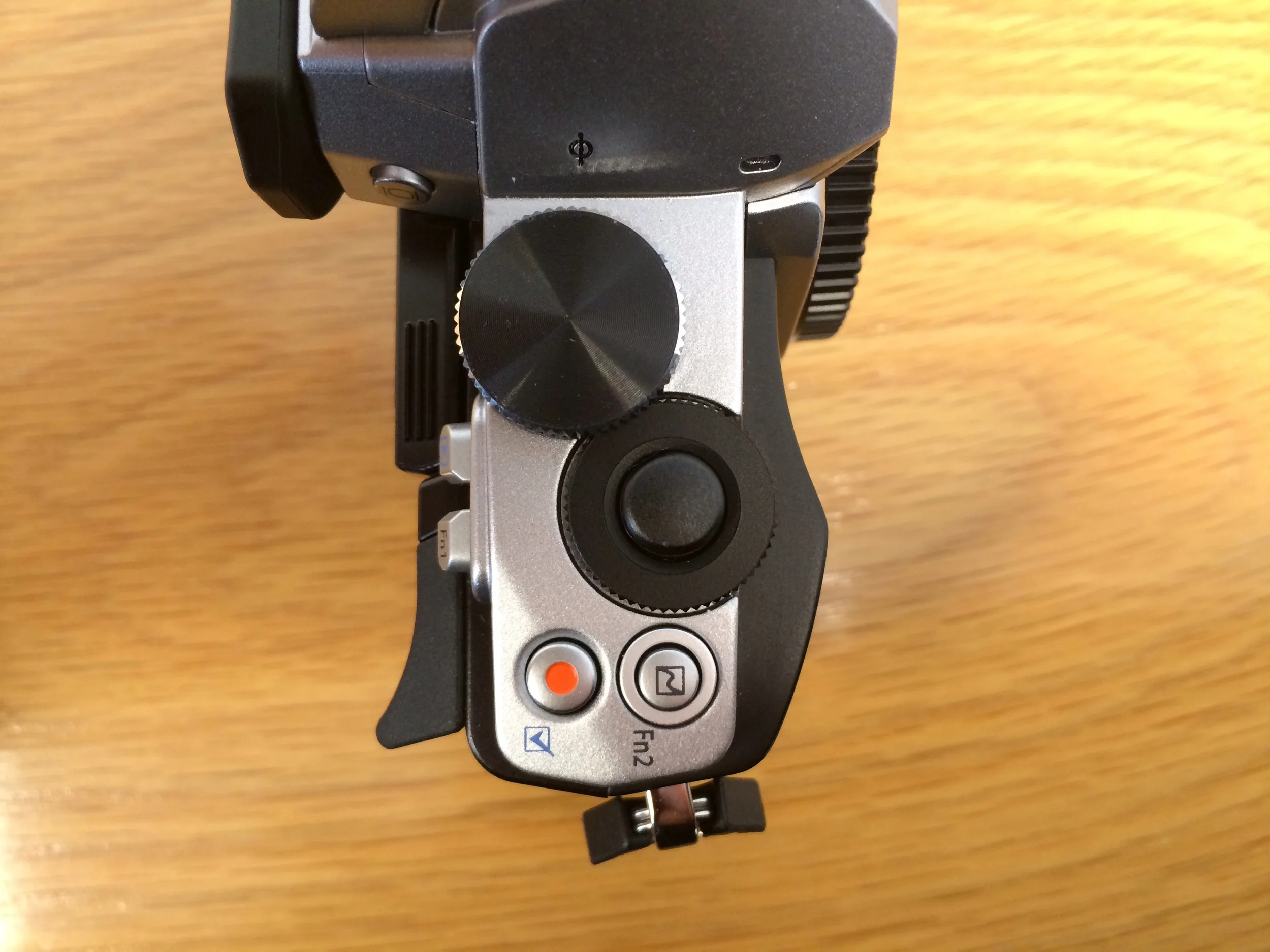
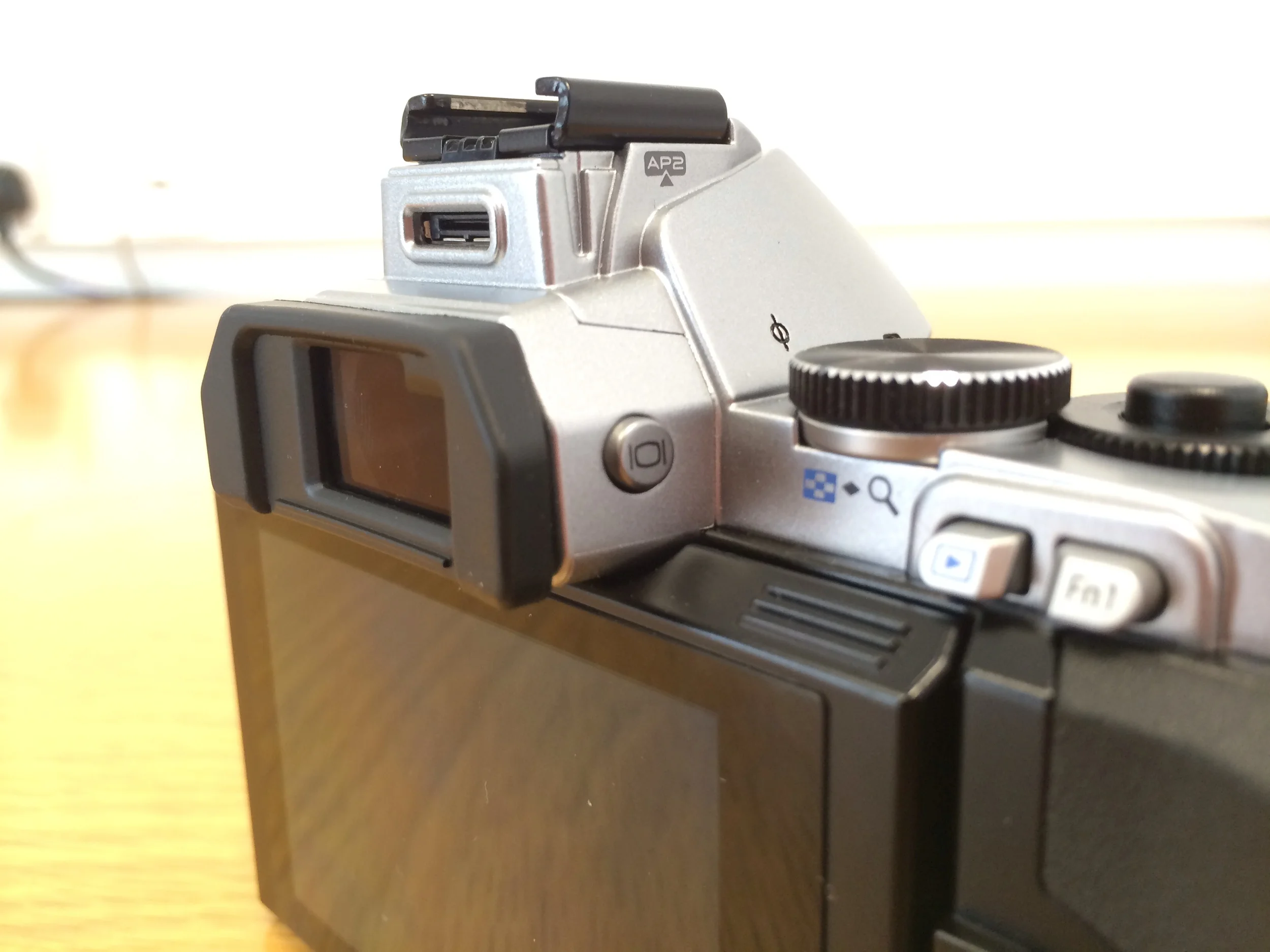
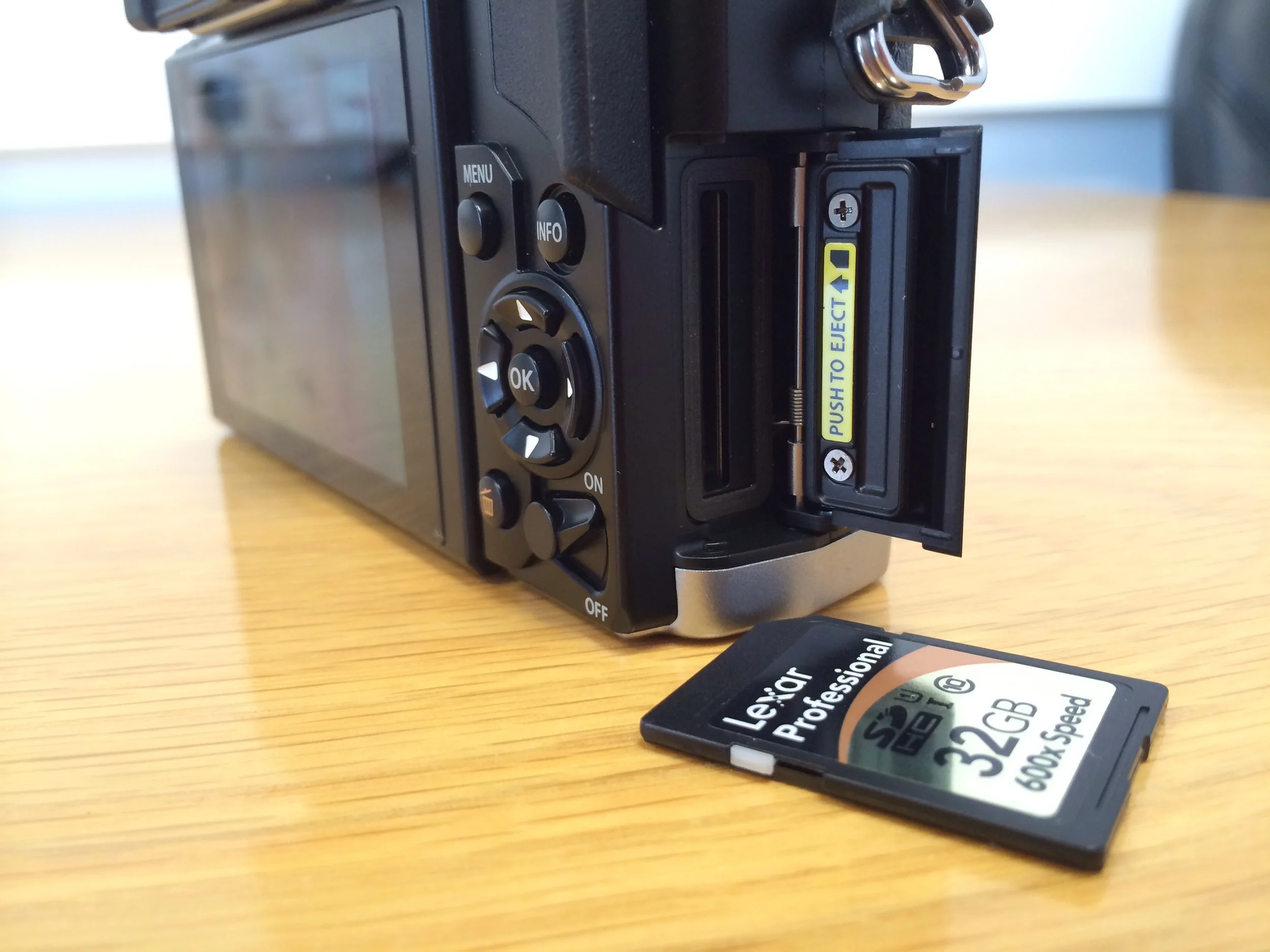
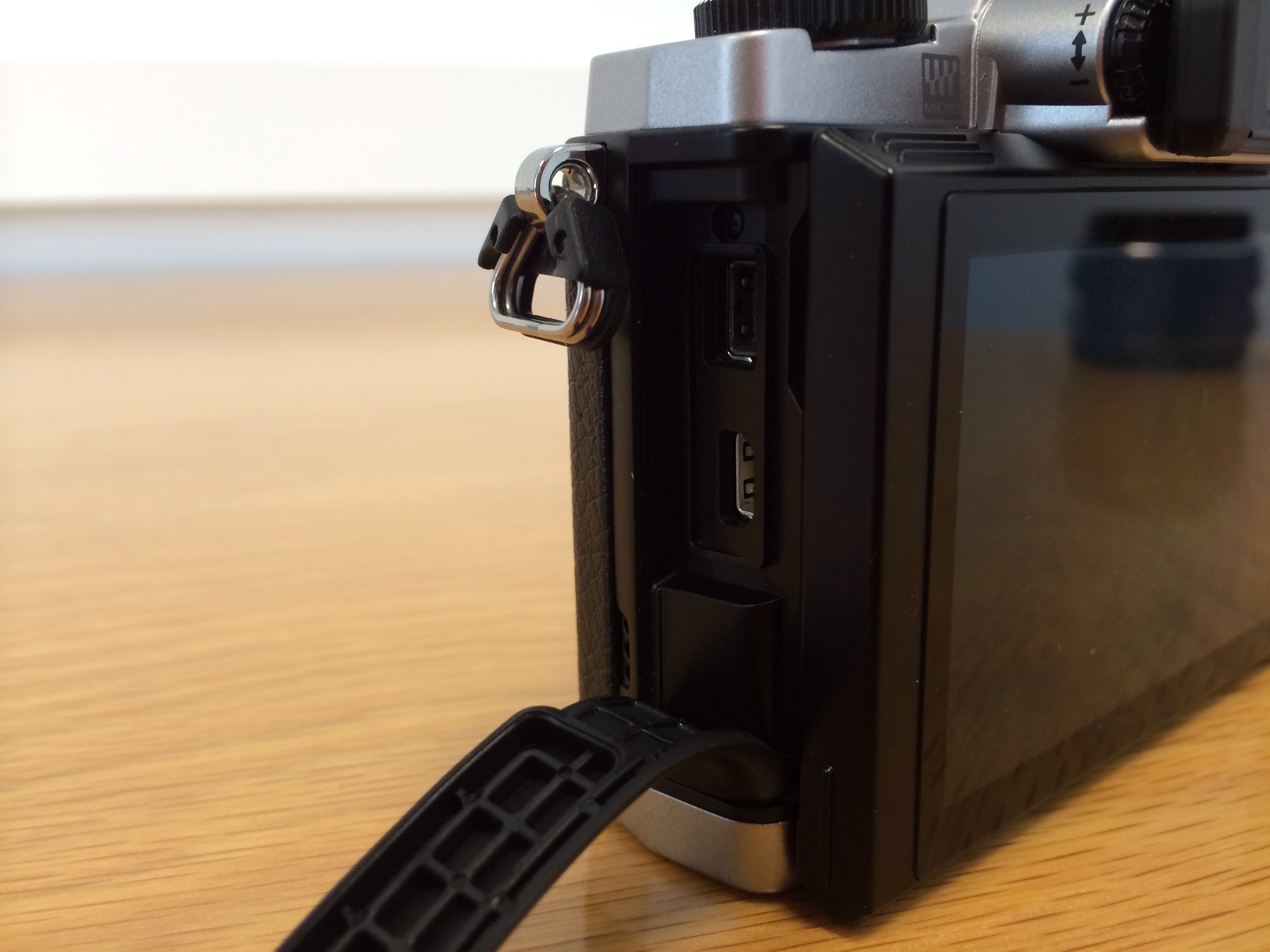
Here, take a look at the the E-M5 in all it's glory:
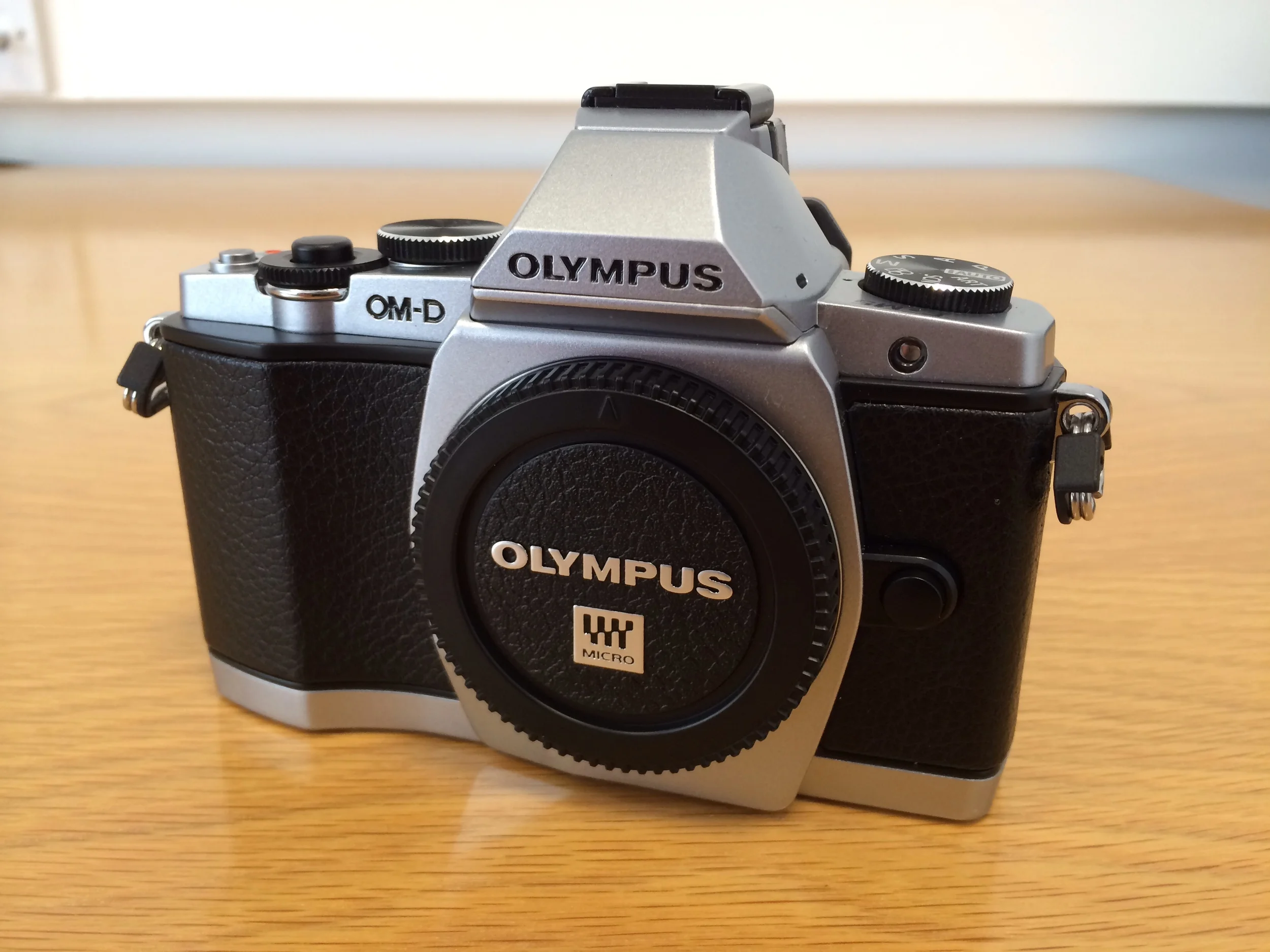
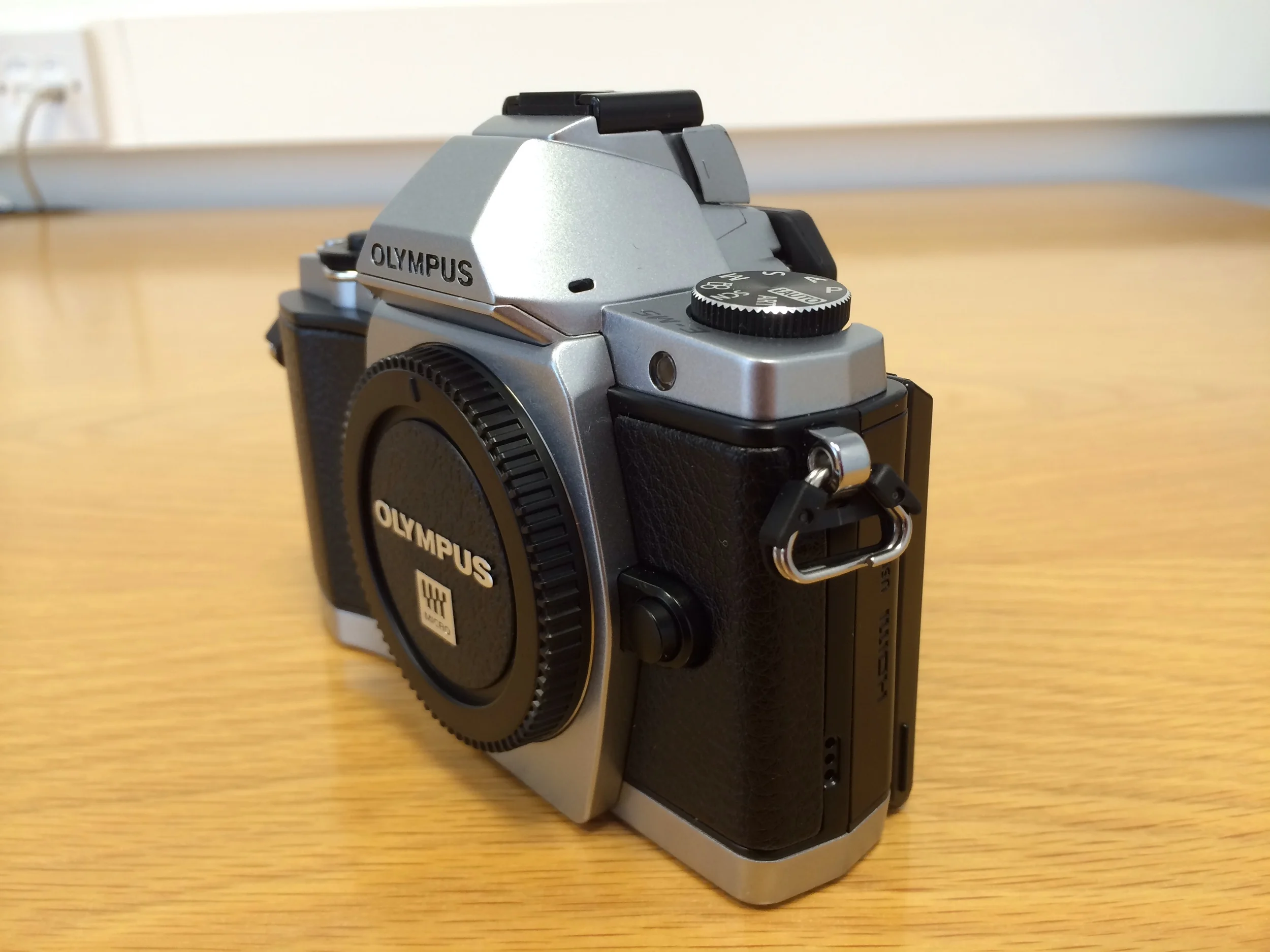
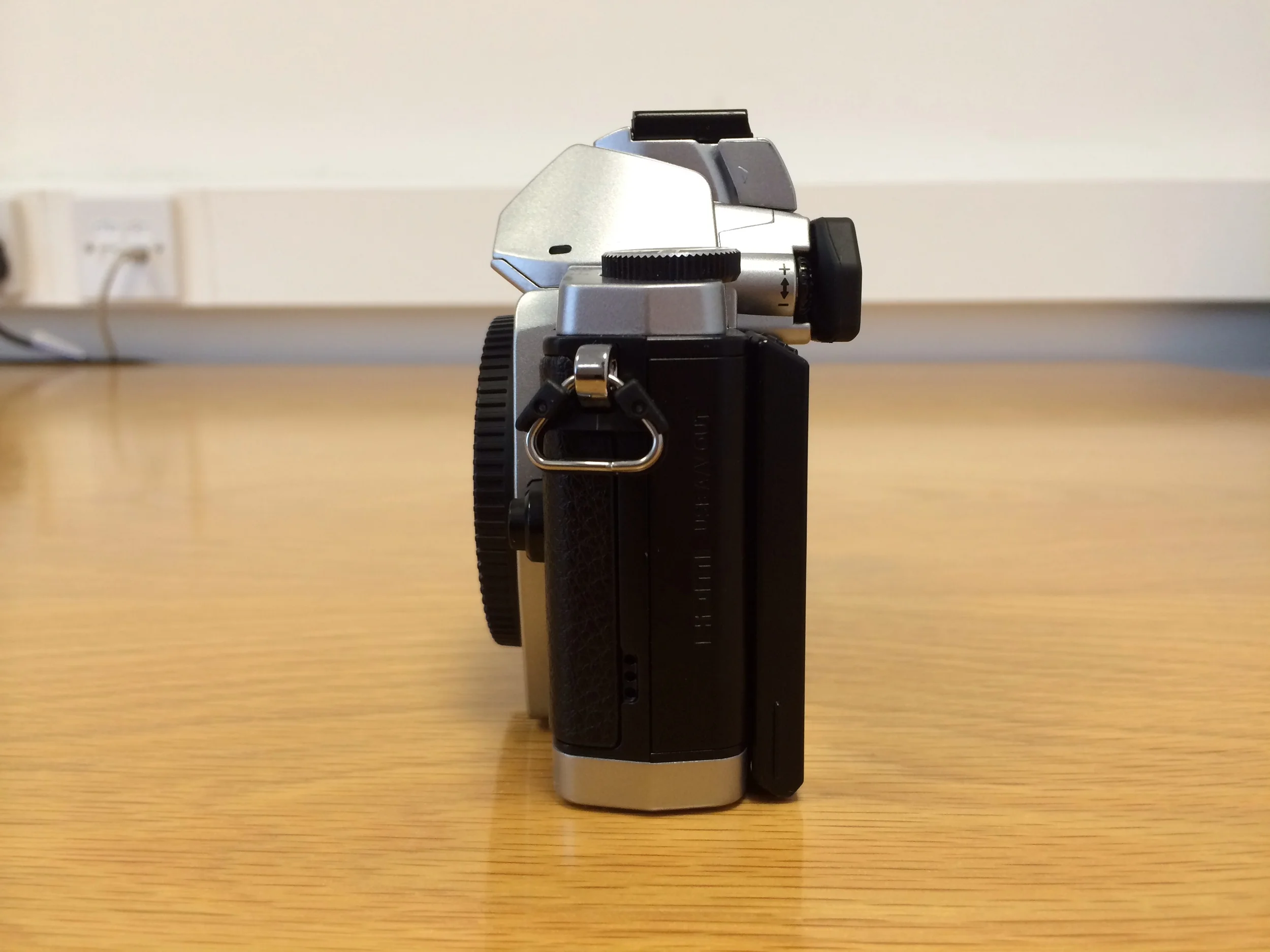
The Electronic Viewfinder (EVF)
Honestly, the EVF and the Focusing were the only two things that were making me nervous about the E-M5 before receiving it from Olympus (we'll come to focusing in a minute). But I'll tell you now that the EVF is a dream to use. I find that there is hardly any lag at all, to the point where it isn't noticeable and doesn't have any negative impact whatsoever. It's absolutely fine. I don't have any other EVF experience to compare it to, again, if you're coming from the world of DSLR's, like myself, I think this EVF does a great job of making it easy to adjust to.
There is no doubt though that the EVF is different if you're used to using a mirror, but that isn't an issue with the OMD, that's just a trait of EVF's in general - they are different to mirrors: after all you're effectively looking at a tiny magnified screen, rather than a reflection.
If you're unsure about Electronic Viewfinders and what they are and what they do - don't worry. They're pretty much a digital viewfinder. Think of them that way. The fact it is showing you a digital representation of what the sensor is seeing though, does offer some very distinct advantages over their mirrored cousins. For example: What you see in an Electronic Viewfinder is the end result once you've pressed the shutter. That's right, when you press that shutter button what you're seeing in the EVF is the picture you'll end up with. It's really cool.
Further more, with the EVF being an actual screen inside an eye cup (if you will) means manufacturers can actually overlay information on the picture and show effects in real time. For example, you can have an in-EVF histogram and you can see everything in black & white whilst you shoot. There are more features and benefits, but for me personally these are the only things I'm interested in as bonus features of using the EVF.
Focusing Speed & Accuracy
This was another one of those elephants in the room that was stopping me from pulling out my wallet and diving into the world of mirrorless: focusing was rumored to be slow on mirrorless cameras, but this was a reported issue with Fuji's, Sony's and Panasonic's too. It wasn't an OMD-Specific report. However, having been fortunate enough to have a unit on loan from Olympus for the sake of this review, it meant that I didn't have to open my own wallet to find out what the camera was like.
Quite simply: this is not an issue with the E-M5 at all.
Olympus claim that the E-M5 has the fastest auto focusing in the world. Whilst that is a bold claim, what I wouldn't refute is that the focusing is darn fast and very accurate, despite only having contrast auto detect. (You'll find that most DSLR's also have phase auto detect). Whatever Olympus have packed inside this thing to make it focus so quickly is simply wonderful.
With regards to the focus accuracy so far when I've used full auto focus (allowing the camera to select the focus point) it's hit the nail on the head 9 times out of 10. I'd say that it's no more or less accurate than a larger DSLR with both phase and contrast auto detect. It's odd, but I can certifiably say "It just works".
What I find though is that I've setup my E-M5 to be as close as possible in terms of it's function button and control dial layouts as possible to my 7d. I haven't the time to re-learn an entire system and I'm not keen on the idea of missing a shot and it being the fault of any camera. As a result, I also use the E-M5 in the same way I use my 7D: Single point, manually selected Auto focus point. This means I use the directional buttons to pick a point to focus on. This may be bad practice as they Olympus seems to snap-on to the correct focus point most of the time, however it's just me and the way I like to work. In a busy scene with a lot going on or when shooting a close-up potrait, I haven't the time or the inclination to risk having the camera focus on the tip of a nose instead of an eye.
But, this does speak to another amazing feature of the Olympus OM-D E-M5 - the customisation options are amazing. I'll talk a little more about customisation shortly, but you'll be pleased to know that the OM-D captures focus extremely well each and every time. This is a total non-issue.
Touch Screen
More and more cameras today are coming packed with touch screens, in fact everything today comes with a touch screen. My daughter, who is two years old always tries to select her favourite programs on Apple TV by touching the TV screen. Oh how the world has changed.
I digress.
The touch screen on the Olympus is simply fine. You can scroll through the photographs using an Apple-esque swipe motion, but it doesn't feature a pinch to zoom gesture.
One way that Olympus have utilized the touch screen to full effect though is by implementing a touch screen focus and shutter function: You touch the area on the screen where you want the camera to focus and it quickly snaps into focus and then fires off a shot. I can't see myself using this a great deal, at least I haven't done so far, but my wife however loves this feature.
We went to Paris a few years back with a Sony NEX-3 and she loved it. Broke her heart when I sold it. Now she's back in love with the Olympus because she doesn't have to feel like a photographer and use the EVF. The quality of the display is such that it is perfectly feasible to obtain focus, compose your scene and make a photograph. So, the Touch screen gets a huge thumbs up from me personally and from my wife also.
I can see myself using the tilt feature of the screen when on the Tube in London. Looking down at the screen whilst it sits on my lap, then pressing the screen to make a photograph. I can see some benefits if truth be told. I'll have to talk more about this when I do the full review.
But, in summary the screen is lovely and bright, refreshes incredibly quickly, is packed with detail and all sorts of customization options. Of course it also titles up and down too, which is a nice feature. It's a great screen. Well done to Olympus!
Note: if the touch screen bothers you simply disable it in the menu.
Dials, Controls & Customisation
After only a few weeks of using the Olympus I'm at the point now where I'm very familiar with the button and dial layout. As I mentioned I use single focus points which I manually select. I've become accustomed to this in the same way I did on the 7d meaning I don't have to pull away from the EVF to figure out which buttons to press, which for me is very important as I don't want to miss a shot.
When I first received my own Olympus the aperture and shutter speed dials were already allocated as I wanted (you can swap them so that the front dial surrounding the shutter button can be aperture or shutter speed and the dial at the rear can be changed too). So, no matter what DSLR system you're coming from you can set the dials up to be closer to what you've become used to on those systems.
You can also adjust the direction of the dials. Rotating clockwise will increase the shutter or aperture if you like, or, change that setting so that anti-clockwise increases them, or vice-versa.
The E-M5 also features two Function buttons (fn.1 & fn.2) and a record button for instant video. You can also re-assign the functions that these buttons activate and deactivate. I personally have ISO set to the top function button, meaning when pressed I can then quickly change my ISO using one of the dials or the directional buttons. I then have the back function button set as my White Balance button. I have left the record button as the video button.
With these settings in place I can now really quickly change all of the settings I need in order to achieve the shot I want. Just like I can with my Canon 7d.
The dials themselves seem relatively well placed and are very solid, continuing the theme of the great build quality. If you add the body grip you get an additional dial and shutter button, but this is simply a duplicate of those that are already on the body of the camera. This is a nice addition as the shutter button and the shutter speed dial (as I have mine set) are then further out on the front of the camera under your index finger. It's a great addition. Furthermore add the second stage grip and you've got the same again, this time on the vertical axis.
Image Quality
Perhaps I should have touched on the image quality earlier on in this review. After all it doesn't matter how much of a masterpiece the camera body is if it doesn't make great photographs, right?
Well I'm personally extremely impressed with the files I'm getting out of the Olympus OM-D E-M5. I actually let Neil Graham borrow the camera for a day and he made the same observation as me - and that is that the files seem to be very forgiving in post-processing. You can really push them.
I'm personally a sucker for a black and white photograph, as you may be able to tell and to be honest the files are lovely and silky in Black and White, you can really push the blacks and the whites for a lovely high contrast monochrome finish.
Unfortunately, at the time of writing this post there are no camera profiles in LightRoom 5 for any Olympus lenses. That doesn't matter too much as you can still take the RAW's into LightRoom and do what you want with them, but it just means you can't use the profile options. But, until I see a before and after with a profile enabled, I'm non-the-wiser as to what imperfections there are with the Olympus MFT lenses. I love them!
High ISO Performance
Before making my own purchase I watched a few hours worth of YouTube videos to see what the OM-D was all about in terms of it's ISO performance. I'd not really heard too many bad things, and the bad things I had heard were in my opinion flawed arguments as most of the time people were comparing the Olympus to top of the range DSLR's such as the 1Dx and D4. Fine, they're all cameras, but the bodies of the Nikon and Canon alone are upwards of £5,000. That's like comparing a Ferrari to a tuned-track car. Sure, the Ferrari isn't cheap and is a very capable car, but those track cars are designed specifically for what they do. As i said above when I was referring to balance (7d with 70-200 vs E-M5 with 17mm) it's not comparing apples for apples. Why would anything that costs 8 times as much be a fair comparison?
Analogy and rant over I'll tell you in my own words about the ISO performance: suffice to say I don't want to talk technical and I haven't done a side by side lab test, but from a practical perspective - I mean actually going out with the camera and shooting at high ISO's of 3200 plus, I can say that I am extremely impressed yet again. The Micro Four Thirds sensor packed with 16megapixels. I found at ISO 3200 I still have very clean pictures. Add a little hint noise reduction in Lightroom and they come out even better. I can honestly say that coupled with a good technique, such as Exposing to the right the results are very clean.
The Price Point
I'm even more impressed with the price of the E-M5 now that I know the camera better: The outstanding build quality, the impressive customisation, the superb selection of lenses and ultimately the superb quality of files that you get as a result of all that. It's a camera that has come down in price quite a bit since it's launch. You can pick up a body only for a little over £500, but as I eluded to at the start of this post right now Olympus are running an offer giving you over £430 of accessories (a 45mm f/1.8 lens and the 2-stage battery grip) for free. This was a hugely deciding factor for me.
The E-M5 can only be described, in my mind, as amazingly capable, fantastically solid and great fun as well as being a perfectly feasible tool for 'proper' work (Portraiture, weddings etc). So, given all that it can do I'd say that the £899 I paid for it with the 12-50mm kit lense from Park Cameras was decent value. (I will say I chose to purchase from an authorized UK stockist for warranty reasons and so that I could make use of Olympus' fully loaded deal). You can pick up an E-M5 Body only for £749 from Park, and I've seen it for around £650 elsewhere.
The amazing thing is that the E-M5 does pack in many of the features, but not all of them, that the E-M1 contains, yet the E-M1, body alone will set you back £1299 from Park.
So, as far as I can see if you're looking for a extremely capable, interchangeable lens, compact camera with EVF the Olympus represents superb value. As do the lenses available. But I'll review lenses separately to this post.
Just for fun: E-M5 shutter in slow motion
E-M5 or E-M1
Okay, I'll start this off by listing the things that the E-M1 has that the E-M5 does not:
- Phase Auto Detection
- Weather Sealing
- WiFi
- Mic-In
- TruePic VII sensor (E-M5 packs a TruePic VI)
- ISO Starts at 100 instead of 200 on the E-M5, but the next firmware release for the E-M5 is supposed to give the E-M5 access to ISO 100 as well
- Focus Peeking
- 81 Focus Points instead of 35
- A higher resolution with over 1,000,000 dots instead of the 600,000 that the E-M5 has
Or you can take a look at the DPReview Side-by-side comparison tool.
Now that I've listed it, it does seem as though the E-M1 packs a lot that the E-M5 does not. However, note that really the only actually features it has in addition to the E-M5 are the Wi-Fi and Mic Input. Sure, I mean the auto detect is phase as well and it has focus peeking and more focus points, but to be honest, from what I can gather and from what many other blogs have said, the resulting picture quality is only marginal.
Now consider that you're going to have to spend out an additional £550 to get all these things that the E-M1 offers, I'm of the opinion that we arrive at the point of diminishing returns. DPReview themselves give the E-M1 an impressive 84% score. That's Great. But the E-M5 scores an impressive 80%. Both achieved 'Gold Awards'
4% difference between the two cameras for £550? Diminishing returns indeed if you ask me.
Furthermore if you're convincing yourself you need the built-in Wifi - Go and buy an Eye-Fi SD card instead for the cost of £32. I don't know about you but I can't see the need for Wireless shooting 90% of the time, perhaps only in a studio location. For this thought the Eye-Fi is perfect and represents actual value for money.
At the end of the day if my clone and I went out to do some street photography or were at a wedding and one of us had the E-M1 and the other the E-M5 - I'm not convinced the photographs on the E-M1 would be £550 worth of better, if much better all.
This is not to say that the E-M1 is rubbish, but more a nod to how amazing the E-M5 actually is.
My verdict is that if you're a photographer coming from the world of DSLR's and you're looking to dip your toes into the mirrorless waters then the E-M5 represents a great value choice. But don't let the word value trick you into thinking 'it's decent for the price', I mean value as in you're getting a hell of a camera for the price. My inclination was to spend the £550 difference on lenses and accessories. After all you're going to need additional batteries and if you're used to shooting to Compact Flash you may need to go and buy a few quality SD cards too now.
That's it. That's my First Impressions and thoughts on the E-M5. In the coming weeks I'll be talking much more about this camera on the blog including why having a smaller camera encourages greater creativity, how having a smaller camera enables me to shoot more than ever, I'll have lens reviews of the 17mm and the 45mm lenses (both f1.8 M.Zuiko Micro Four Thirds lenses from Olympus. I'll also be reviewing the HLD-6; the battery grip and then there will be a full, in-depth video review of the E-M5 too.
I'm so looking to get an E-M1 from Olympus once in send back the lease E-M5 and I've also agreed to take a look at the PEN E-P5, which looks quite cool as well.
So I hope you found this review useful, keep an ear to the ground for more E-M5 updates and be sure to subscribe to the blog for future updates too!